A defining moment in the mansion’s modern history came on November 1, 2022, when Taylor Galaska, President of the Sharon Historical Society, was approached about the possibility of purchasing the property. At the time, the Society—founded in 2013—had limited fundraising experience, no endowment, and few financial resources. Despite these challenges, a phone call later that morning with JCL Development CEO and Sharon real estate developer James Landino proved pivotal. During the conversation, Landino pledged $10,000 toward the effort and expressed strong confidence that the community could rally to make the project a reality. He would go on to play a key role in connecting the Society with additional donors.
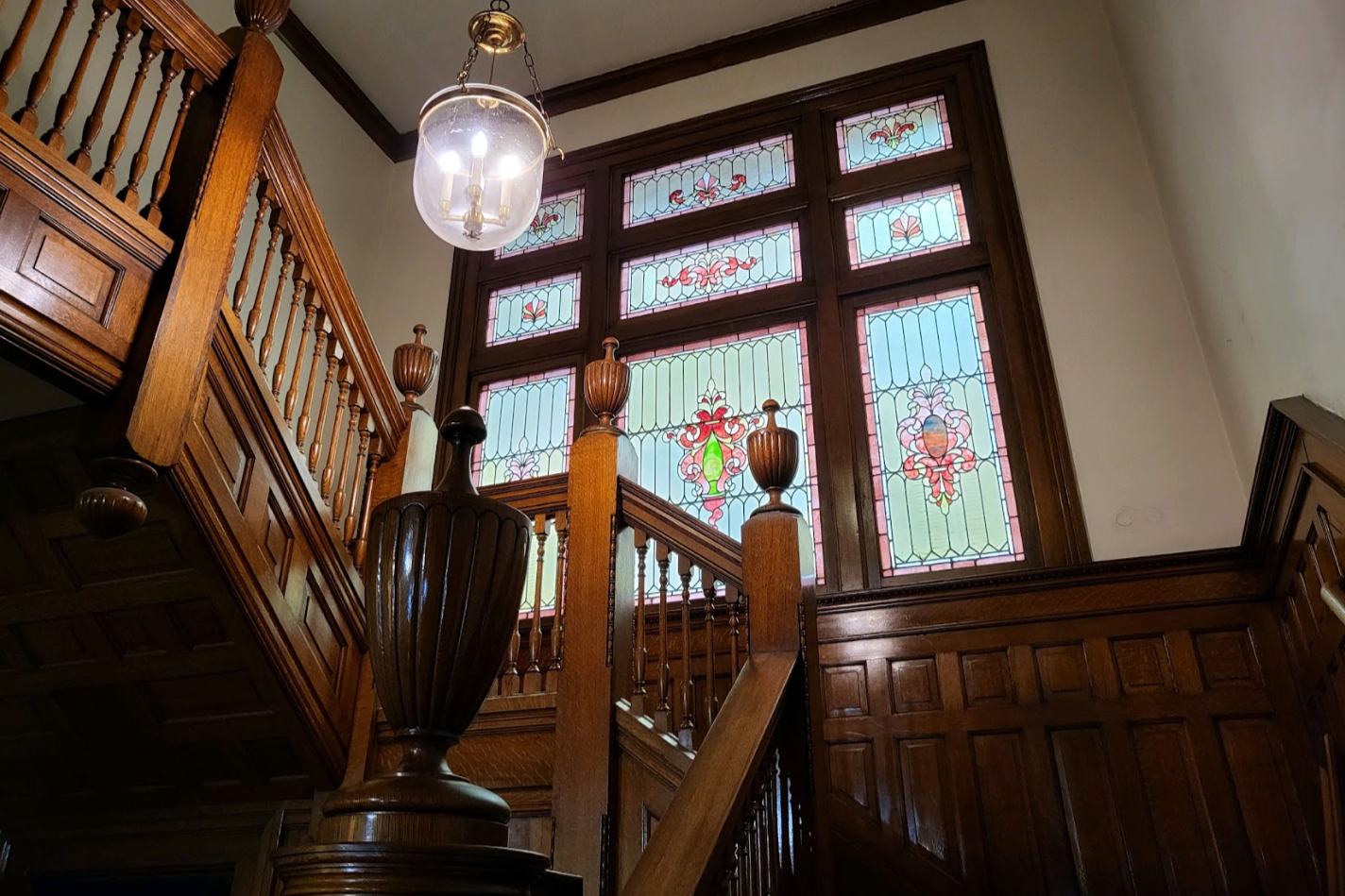
An existing agreement set the purchase price at $200,000, and the Society was given just six months to raise the necessary funds. It was made clear that failure to do so could result in the demolition of the mansion. Soon after, Galaska and Society Treasurer Wallace “Mike” Kotyk met with the owner’s representative to tour the property. Upon entering, they were struck by the mansion’s original unpainted woodwork, remarkable stained glass, and overall structural integrity—features that reinforced the importance of preserving the building.
Just days later, on Monday, November 7, 2022, a special meeting of the Society’s Board of Directors was held at the mansion itself. The setting allowed board members to experience the space and understand its potential fully. James Landino attended and delivered an encouraging message, reinforcing his belief that the project was both achievable and worthwhile.
Through an ambitious and determined fundraising effort—supported by private donors, local foundations, and a mortgage secured through Mercer County State Bank—the Sharon Historical Society successfully reached its goal. By May 2023, the funds were in place, and the purchase was finalized.
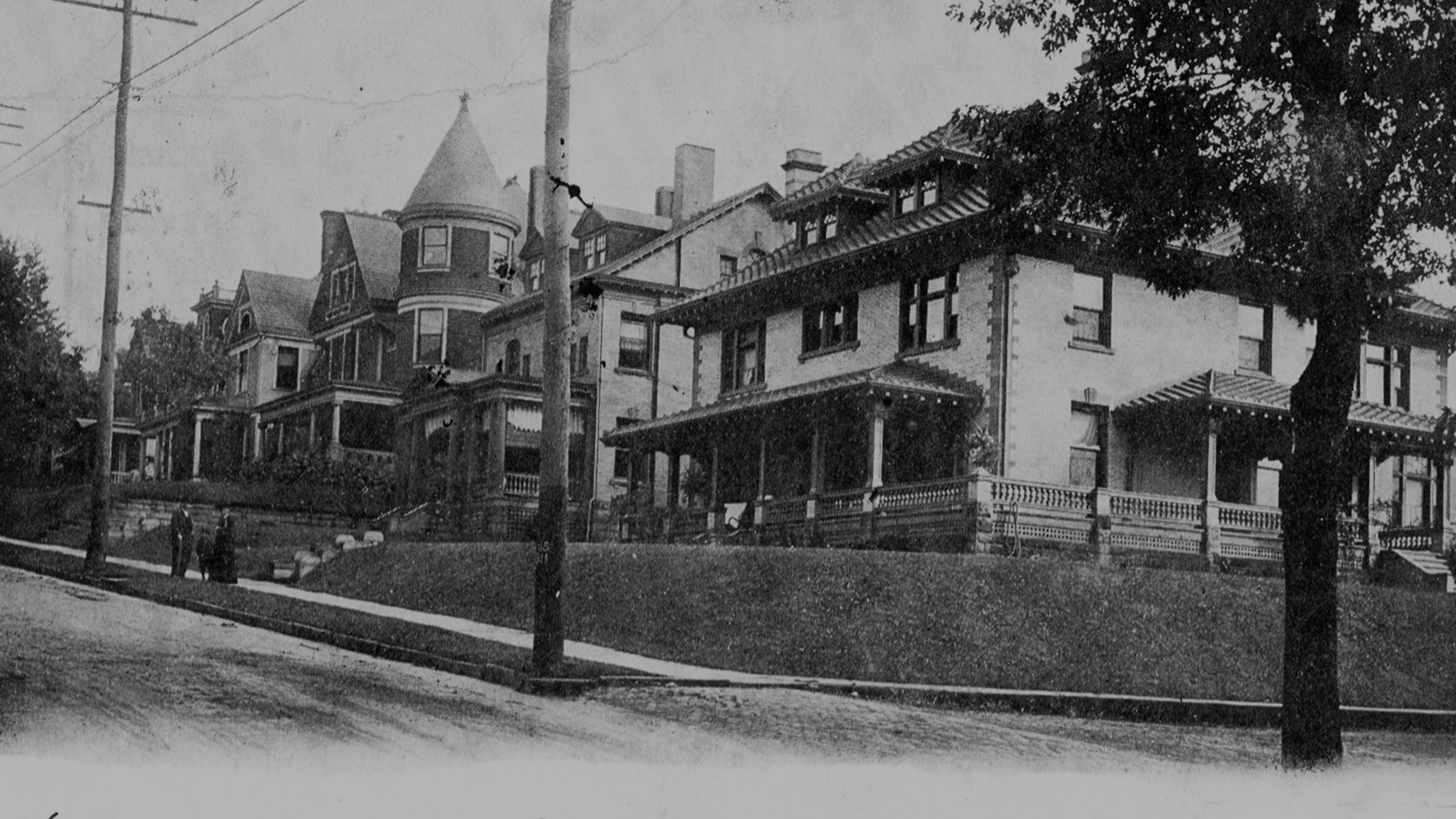
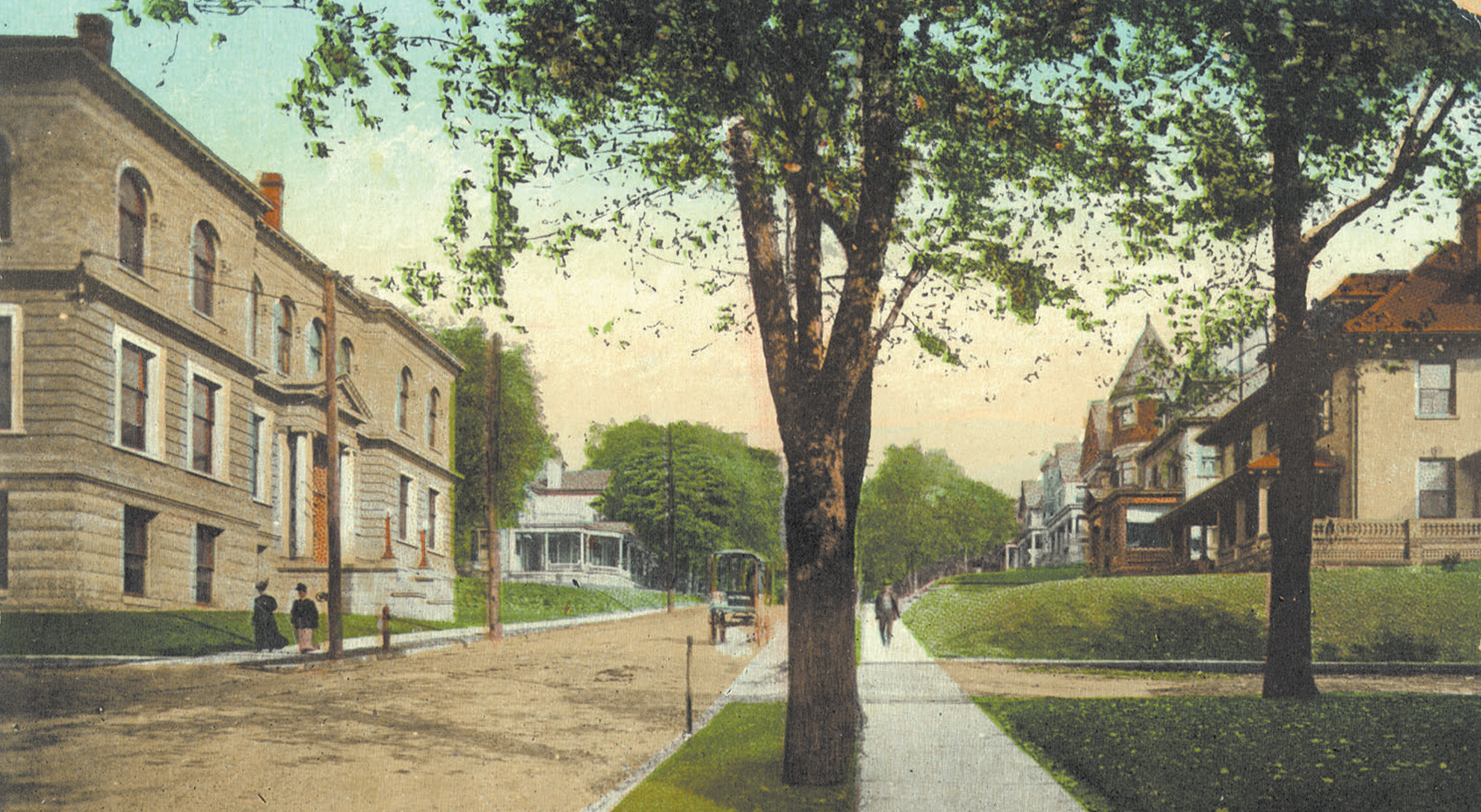
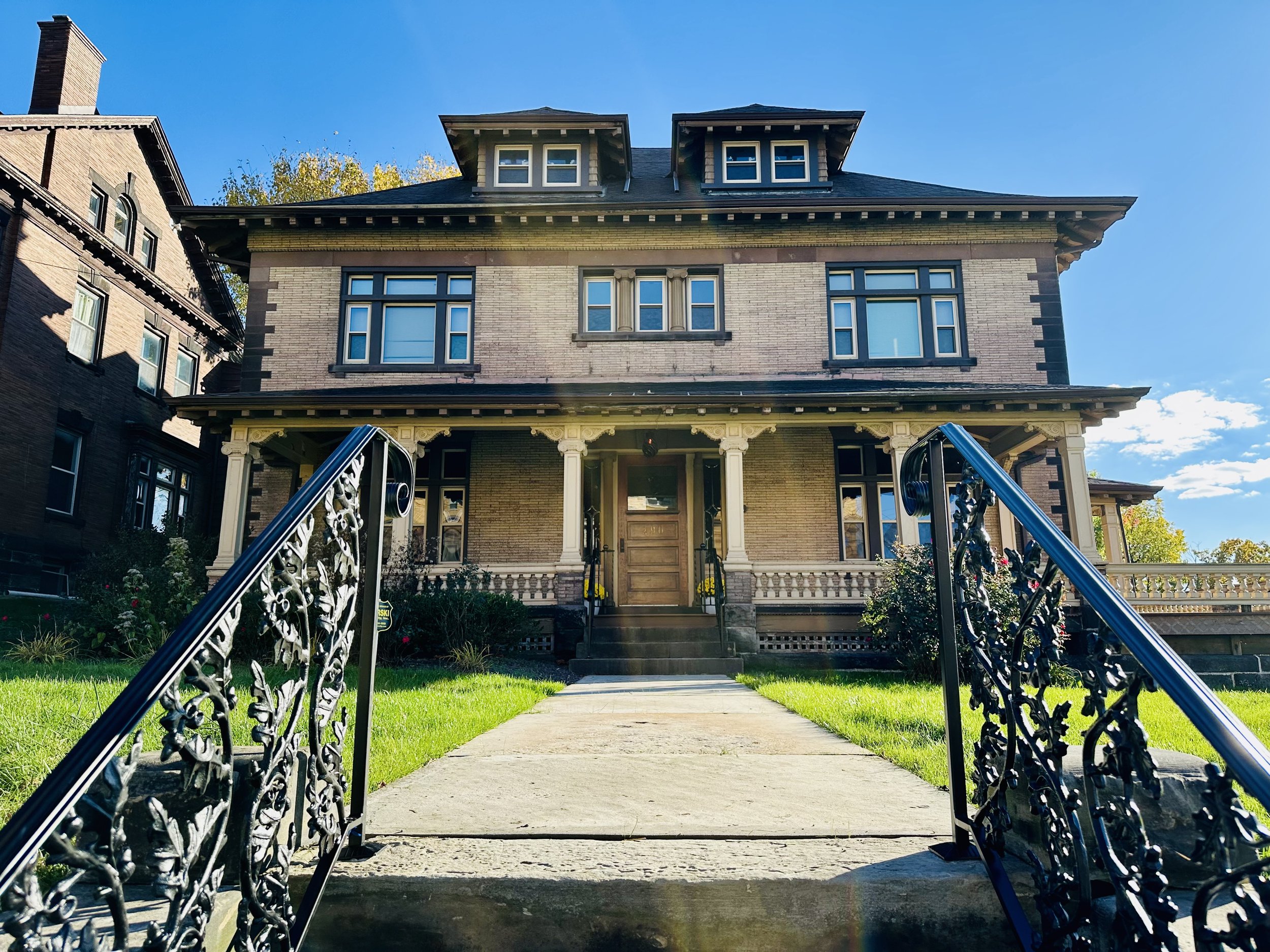
Today, the Wallis Mansion has entered an exciting new chapter as the home of the Sharon Historical Society. Under the leadership of President Taylor Galaska, with the support of Treasurer Wallace “Mike” Kotyk, plans are underway to transform the mansion into a museum and research center. Ongoing fundraising, thoughtful planning, and careful restoration efforts continue to bring this vision to life, ensuring the preservation of this historic landmark for generations to come.
A Living Resource for Local History
The Sharon Historical Society is actively restoring the mansion to serve as a vibrant center for education and preservation. Plans for the space include administrative offices, archival storage, research areas, and exhibit space dedicated to local and regional history.
A gift shop, open on the first floor for special events at this time, offers publications and items related to the Society’s mission. Restoration efforts aim to honor the home’s original character, with attention to Victorian, Arts & Crafts, and Art Nouveau design elements that once defined its interior spaces.
Through careful stewardship, the Wallis Mansion is being transformed from a private symbol of industrial-era success into a shared community resource—ensuring that the legacy of William L. Wallis and the history of Sharon continue to be preserved and celebrated for generations to come.